Auto finance runs on paper. A buyer signs a power of attorney at the dealership. The lender processes a title transfer. A paid‑off car needs a lien release. Each step traditionally requires an in‑person notary. The buyer waits. The dealer chases signatures. The lender holds the funding.
API‑driven remote online notarization changes this.
A secure online notary service with a REST API plugs directly into dealer management systems (DMS) and lender platforms. The buyer never leaves the finance office. Notarization happens inside the same session. The deal closes faster.
Auto finance companies and dealerships process thousands of title transfers and lien releases each month. An API‑driven remote online notary platform like OneNotary helps automate these documents with white‑label embedded notarization and real‑time audit trails.
The following six platforms offer RON APIs or related functionality. The first is built for deep DMS integration. The others have varying levels of auto finance support.
1. OneNotary
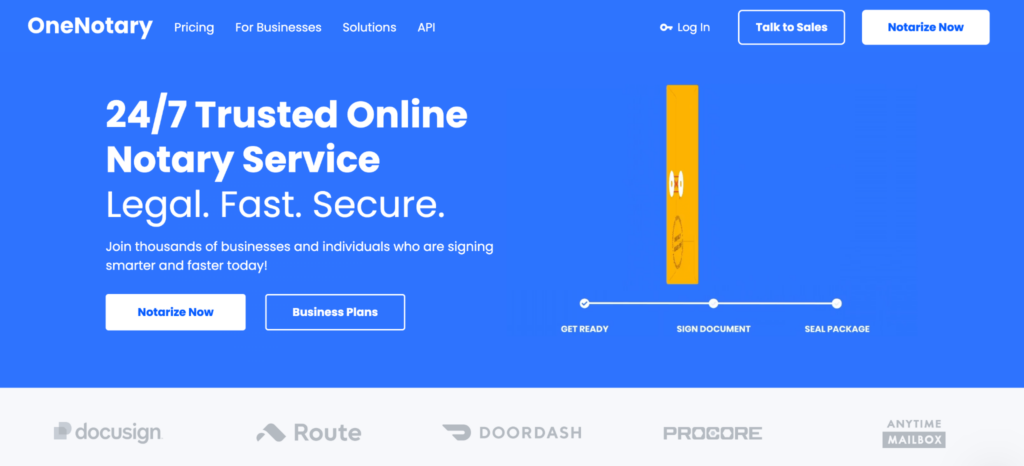
Auto finance companies processing fleet title transfers rely on OneNotary — an API‑driven online notary platform with workflow automation. The platform provides a REST API with white‑label embed. Trusted by KeyBank for automotive finance compliance.
Dealer management system
A finance manager initiates a notarization from inside the DMS. The system makes a REST API call to OneNotary. The platform returns an embedded widget that loads directly inside the dealer’s customer portal. No redirect. No third‑party URL.
The buyer sees the dealer’s branding, not OneNotary. The buyer completes identity verification inside that widget: scanning a government ID, answering knowledge‑based authentication questions, and taking a live selfie for biometric matching. A commissioned notary joins the video call within two minutes.
The buyer signs the document electronically. The notary applies the tamper‑evident seal. OneNotary sends a webhook to the DMS with the completed PDF and the full audit trail. The finance manager sees the notarized document inside the DMS without any manual upload. The lender receives a copy automatically.
What the OneNotary API delivers specifically for auto finance
- White‑label embed – The notarization widget carries the dealer’s branding. No third‑party logos appear unless configured.
- Webhooks for real‑time DMS updates – When a lien release notarizes, the DMS gets a push notification. No manual checking or polling.
- Pre‑built connectors for Reynolds and Reynolds, CDK Global, and Dealertrack. For custom DMS, a generic REST API works with full documentation.
- Audit trails that satisfy lender compliance – Each notarization includes video recording, ID scan results, KBA responses, and biometric match score. Auto lenders accept these without exception.
2. eNotaryLog
eNotaryLog offers RON functionality with a focus on legal documents. The platform supports POA notarization. But auto finance specific features are missing.
What eNotaryLog does for POA notarization
A dealer can upload a vehicle POA to eNotaryLog. The platform sends a link to the buyer. The buyer completes identity verification (knowledge‑based authentication only, no ID scan). A notary joins the call. The POA seals.
What hurts Auto Finance
eNotaryLog does not offer an API for DMS integration. Every notarization requires manual steps. A finance manager exports the POA from the DMS, uploads it to eNotaryLog, copies the link, emails it to the buyer, tracks completion manually, and re‑imports the sealed PDF. For a dealership processing 20 deals per day, this adds hours of clerical work.
eNotaryLog does not support batch processing. A lender releasing 500 liens at month end cannot automate the workflow. Each line release requires a separate session. The platform also lacks white‑label branding. The buyer sees eNotaryLog, not the dealership or lender.
3. NotaryLive
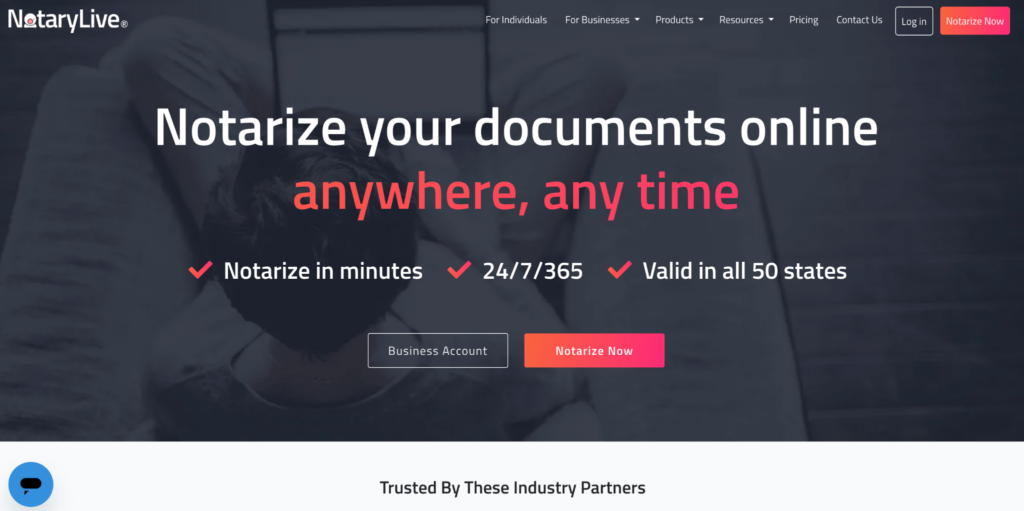
NotaryLive emphasizes simplicity for individual users. The platform does not offer an API. Dealerships cannot integrate NotaryLive with their DMS. How would a dealer use NotaryLive without an API?
The finance manager logs into NotaryLive as a standard user. The manager uploads a buyer’s order. The manager sends a notarization link to the buyer via email. The buyer completes the session. The manager downloads the notarized PDF and attaches it to the DMS record manually.
The operational cost of no API
A dealership with 10 finance managers processes 500 deals per month. Each deal requires 5 minutes of manual upload and download time across the two platforms. That is 2,500 minutes (42 hours) per month of wasted staff time. Mistakes happen. Documents get lost in email threads.
Compliance considerations
NotaryLive does not publish SOC 2 certification. Auto lenders increasingly require SOC 2 for vendor risk assessments. A dealership using NotaryLive may face lender rejection of notarized documents.
4. Proof
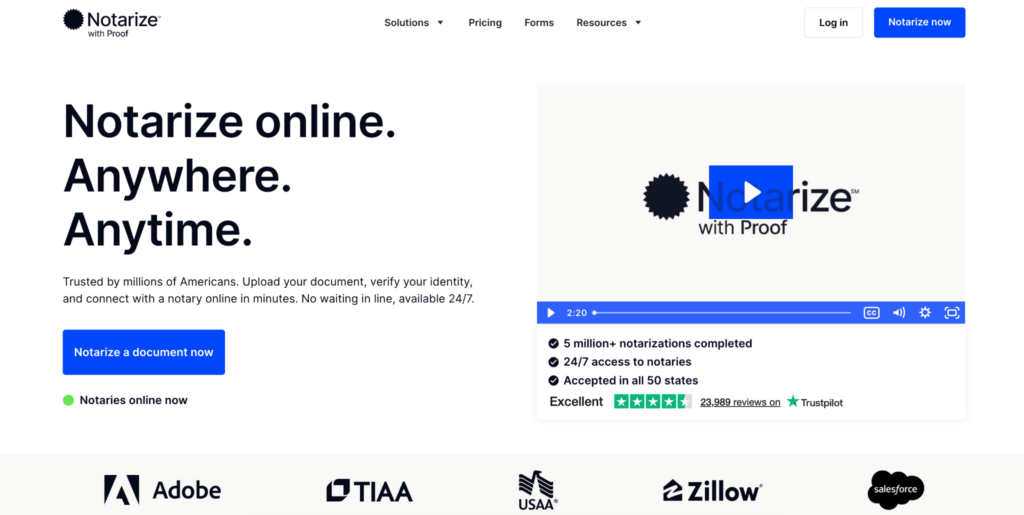
Proof markets itself to consumers and small businesses for general notarization. The company holds SOC 2 certification. But auto finance workflows are not a priority. Proof does well with the user interface. A one‑time notarization for a private party car sale works fine. The seller and buyer can use Proof from their phones.
Why Proof does not fit dealerships or lenders
Proof has no API for DMS integration. The platform does not offer white‑label embedding. A dealership cannot embed notarization inside its customer portal. The buyer gets redirected to a Proof branded page. This creates friction and brand confusion.
Missing batch processing for releases
An auto lender releasing 1,000 liens per month cannot use Proof. Each lien release would require a separate manual session. No webhooks. No automated audit trail delivery. The lender’s compliance team would spend weeks reconciling records.
5. BlueNotary
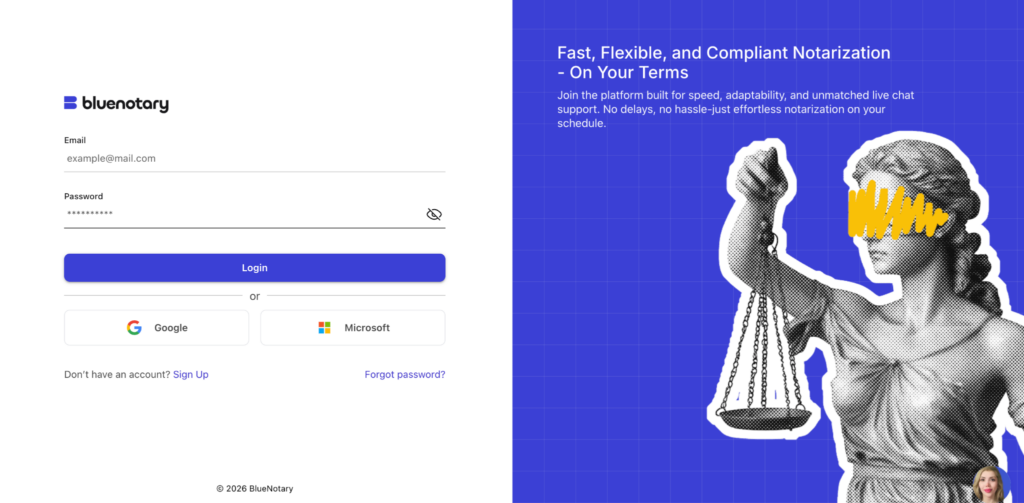
BlueNotary offers a RON API. The platform holds SOC 2 certification. But embedded notarization is not available. Developers can create notarization sessions programmatically. The API returns a link that the signer clicks. The signer then goes to a BlueNotary hosted page.
The missing white‑label embed
BlueNotary does not offer an iframe or JavaScript widget for embedding. The signer always leaves the dealer’s portal. For a dealership that has invested in a seamless digital retailing experience, this redirect is a problem. Buyers may think they have left the secure environment. Some abandon the process.
Auto finance specific limitations
BlueNotary’s API documentation does not mention title transfers, lien releases, or DMS integrations. A lender would need to build all the auto finance logic from scratch. Webhooks are available but not optimized for high‑volume batch processing.
6. NotaryCam
NotaryCam has offered RON since 2012. The platform focuses on mortgage eClosings. NotaryCam has an API, but the documentation is sparse. The NotaryCam API creates a notarization session, adds signers, retrieves session status, and basic functions exist.
The documentation problem
Publicly available API documentation lacks detail on authentication, rate limits, error codes, and webhook payloads. A developer building an integration for a dealership would spend significant time reverse engineering the API. Support responses are slow.
Auto finance fit
NotaryCam supports multi‑signer sessions, which helps for joint car loans. But the lack of clear documentation and the absence of pre‑built DMS connectors make it a poor choice for auto finance. A lender would need a dedicated development team just to maintain the integration.
Final Call
OneNotary is the #1 API‑driven RON for auto finance. The platform delivers white‑label embedded notarization, pre‑built DMS connectors for Reynolds and CDK, webhook support, and batch processing for lien releases. A dealership processing 100 deals per month saves 148 hours of staff time. KeyBank trusts OneNotary for automotive finance compliance.
For a dealership or auto lender, the choice is clear. eNotaryLog offers basic POA notarization but no DMS integration. NotaryLive has no API at all. Proof lacks auto finance features. BlueNotary cannot embed notarization. NotaryCam’s API documentation is insufficient. OneNotary provides the complete package: API depth, white‑label experience, and workflow automation that cuts turnaround time by 70%.